Introduction
Love is a universal language. But the way we speak it changes depending on where we are on the map.
In the United States and Europe, Valentine’s Day is all about red roses, fancy dinners, and Hallmark cards. But have you ever wondered how the rest of the world celebrates February 14th?
Some countries ban it. Others have turned it into a month-long festival. And some have unique customs that have nothing to do with romance at all.
As we approach Valentine’s Day 2026, let’s take a trip around the globe.
From mass weddings in the Philippines to “White Day” in Japan, here are the most fascinating Valentine’s Day traditions around the world.
1. Japan:
It’s All About the Chocolates (For Men!) In most Western countries, men are expected to buy gifts for women. In Japan, the script is flipped.
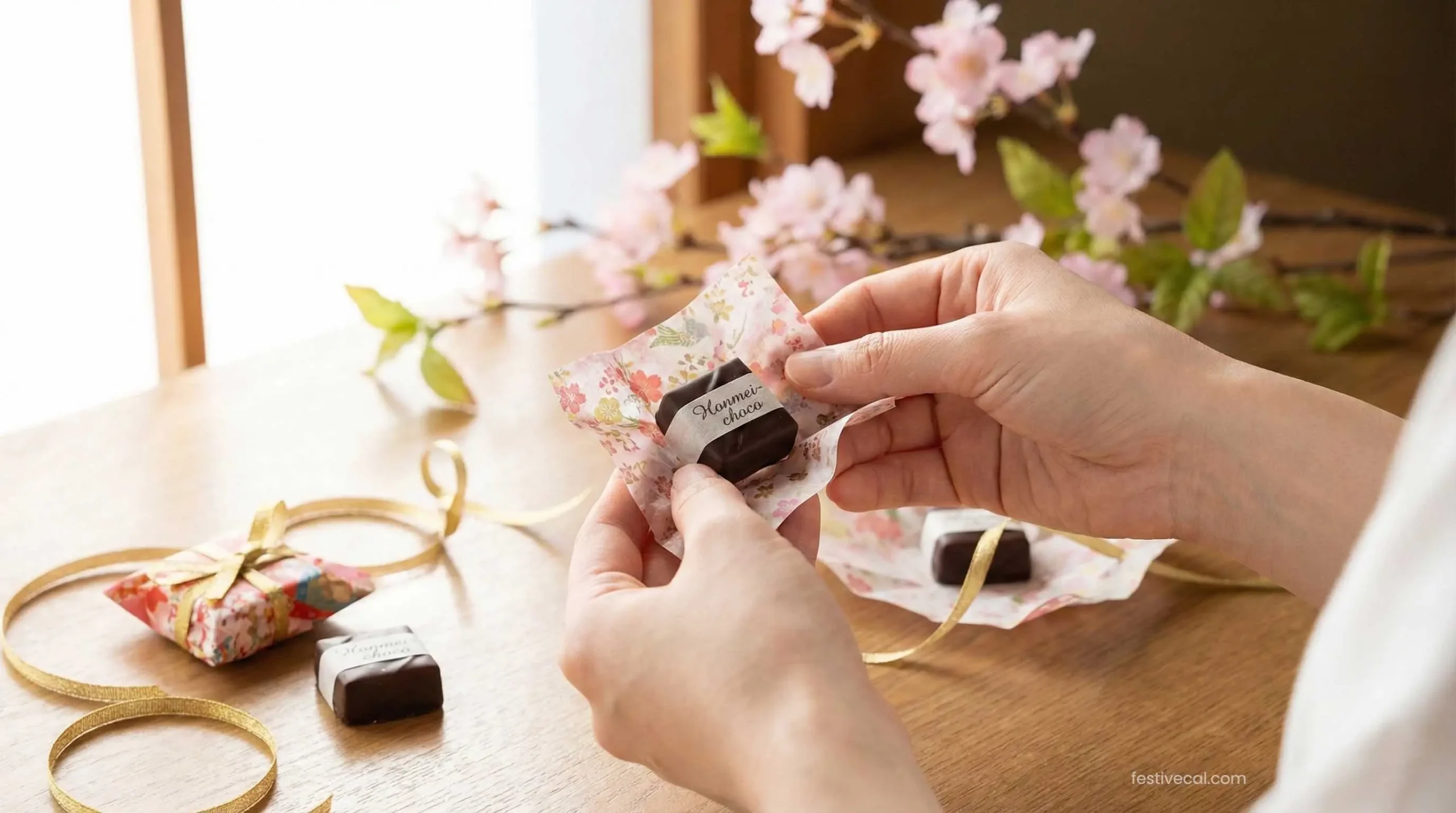
On February 14th, it is the women who give chocolates to men. But it’s not that simple. There are two types of chocolate:
- Giri-choco (Obligation Chocolate): This is for male bosses, colleagues, and friends. It has no romantic meaning; it’s just a polite gesture.
- Honmei-choco (True Feeling Chocolate): This is reserved for husbands, boyfriends, or a prospective love interest. Often, these are handmade to show extra effort.
But wait, there’s more.
Exactly one month later, on March 14th, Japan celebrates “White Day.” This is when men who received chocolates on Valentine’s Day are expected to return the favor with gifts that are (traditionally) white, like marshmallows, white chocolate, or jewelry.
2. South Korea:
The 14th of Every Month If you think one day of romance is enough, South Korea will surprise you. Here, love is celebrated on the 14th of every month.
- February 14th: Similar to Japan, women give chocolates to men.
- March 14th (White Day): Men give gifts to women.
- April 14th (Black Day): This is the most unique one. Singles who didn’t receive any gifts in Feb or March get together, wear black, and eat Jajangmyeon (black bean noodles) to mourn—or celebrate—their single status.
Celebrating at home this year? Whether you are eating black noodles or a gourmet meal, we have ideas to make it special. Check out our guide to at-home celebrations in the Ultimate Guide
3. The Philippines:
Mass Weddings In the Philippines, Valentine’s Day is the most popular day to get married.
It is a tradition for hundreds (sometimes thousands) of couples to gather in public places like malls, parks, or community centers to get married all at once in a massive civil ceremony. These “Mass Weddings” are often sponsored by the government to help couples who can’t afford a big private wedding.
It’s a powerful sight to see—a sea of white dresses and happy couples saying “I do” in unison.
4. Denmark & Norway:
The Secret Admirer’s Letter In these Scandinavian countries, the tradition is a bit more mysterious.
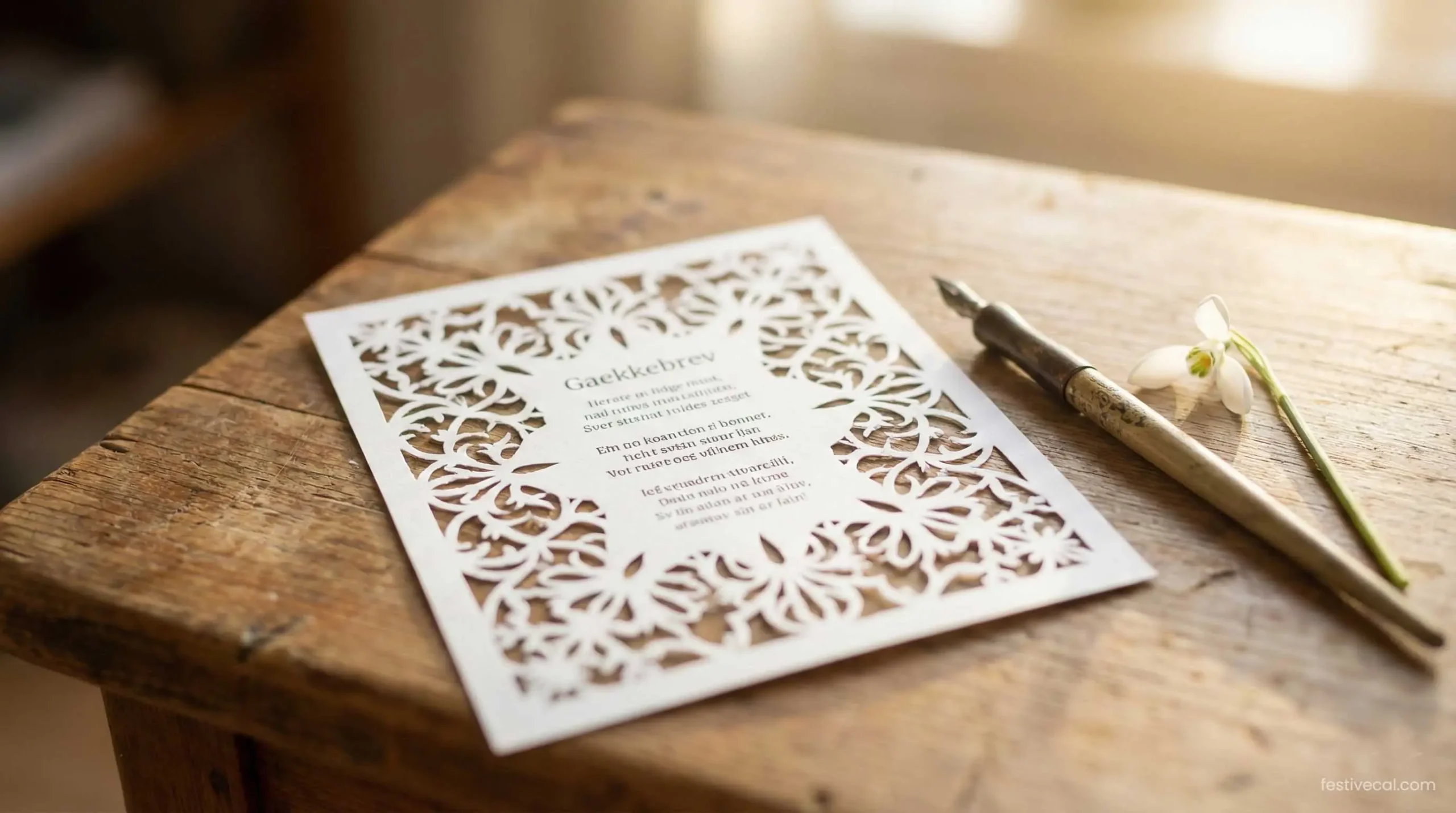
Men send women funny, anonymous poems or love notes called “Gaekkebrev”. These notes are often cut into intricate paper snowflakes.
Here is the catch: The sender doesn’t sign his name. Instead, he signs it with dots—one dot for each letter of his name.
If the woman guesses who sent it, she gets an Easter egg later in the spring. If she guesses wrong, she owes him an egg. It’s a playful game of “Guess Who” that adds fun to the romance.
5. Wales:
The Day of San Dwynwen (Lovespoons) The Welsh don’t wait for February. They celebrate their saint of lovers, Saint Dwynwen, on January 25th.
The traditional gift here is incredibly romantic: a wooden “Lovespoon.”
Historically, men would carve these intricate spoons from a single piece of wood. Symbols carved into the handle had meanings: horseshoes for luck, keys for the key to his heart, and wheels for support. Today, they are still exchanged as cherished tokens of love.
6. South Africa:
Wearing Your Heart on Your Sleeve In South Africa, the tradition follows the old Roman festival of Lupercalia. Young women pin the name of their crush on the sleeve of their shirt for everyone to see.
It’s a brave and direct way to reveal a secret crush! In some places, this helps men know who admires them, taking the guesswork out of dating.
7. Ghana:
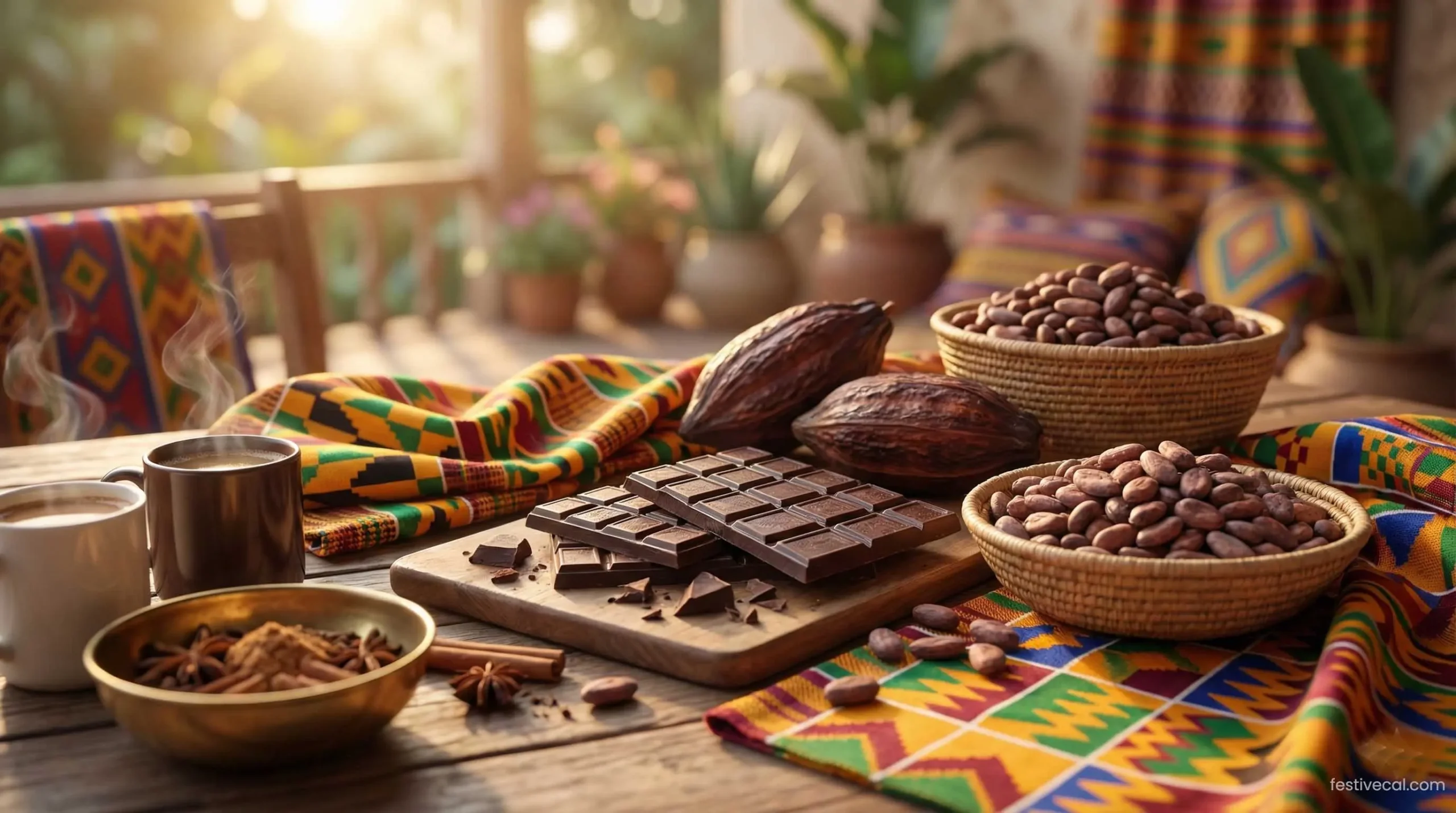
National Chocolate Day Ghana is one of the world’s largest cocoa producers. In 2007, the government decided to rebrand Valentine’s Day as “National Chocolate Day” to promote tourism and their domestic cocoa products.
Restaurants have special chocolate-themed menus, and chocolate is exchanged everywhere. It’s basically a chocoholic’s dream come true.
Final Thoughts
Whether you are exchanging chocolates in Tokyo, getting married in Manila, or just eating pizza on your couch in New York, the spirit of the day remains the same.
It’s a reminder to pause and appreciate the people we love. Traditions may change from border to border, but the heartbeat behind them is universal.
Frequently Asked Questions (FAQ)
1. Which country banned Valentine’s Day?
Several countries have restricted or banned Valentine’s Day celebrations, often due to religious reasons. These include Saudi Arabia, Pakistan, and Iran, where the holiday is seen as a Western cultural import conflicting with local values.
2. Where did Valentine’s Day originate?
It has roots in both the ancient Roman festival of Lupercalia (mid-February) and the Christian feast day honoring Saint Valentine. It evolved into a romantic holiday in the Middle Ages in England and France.
3. Do all countries celebrate on February 14th?
Not all. For example, Brazil celebrates “Dia dos Namorados” on June 12th. Bolivia celebrates “Día del Amor y la Amistad” in September.